Water Heater Leak Detection — non-invasive detection in Summerville, SC
Water at the base of a water heater triggers one urgent question: is it the heater, or the pipes around it? The answer decides everything — a failed tank means replacement, while a weeping supply connection, a discharging T&P valve, or a sweating cold-water line means something far simpler. They all puddle in the same place.
Our investigation separates the heater from its surroundings. We inspect the tank, test the temperature-and-pressure relief valve, check every connection, and — critically — determine whether the water is even coming from the heater at all. You get a documented source, not a shrug and a sales pitch.
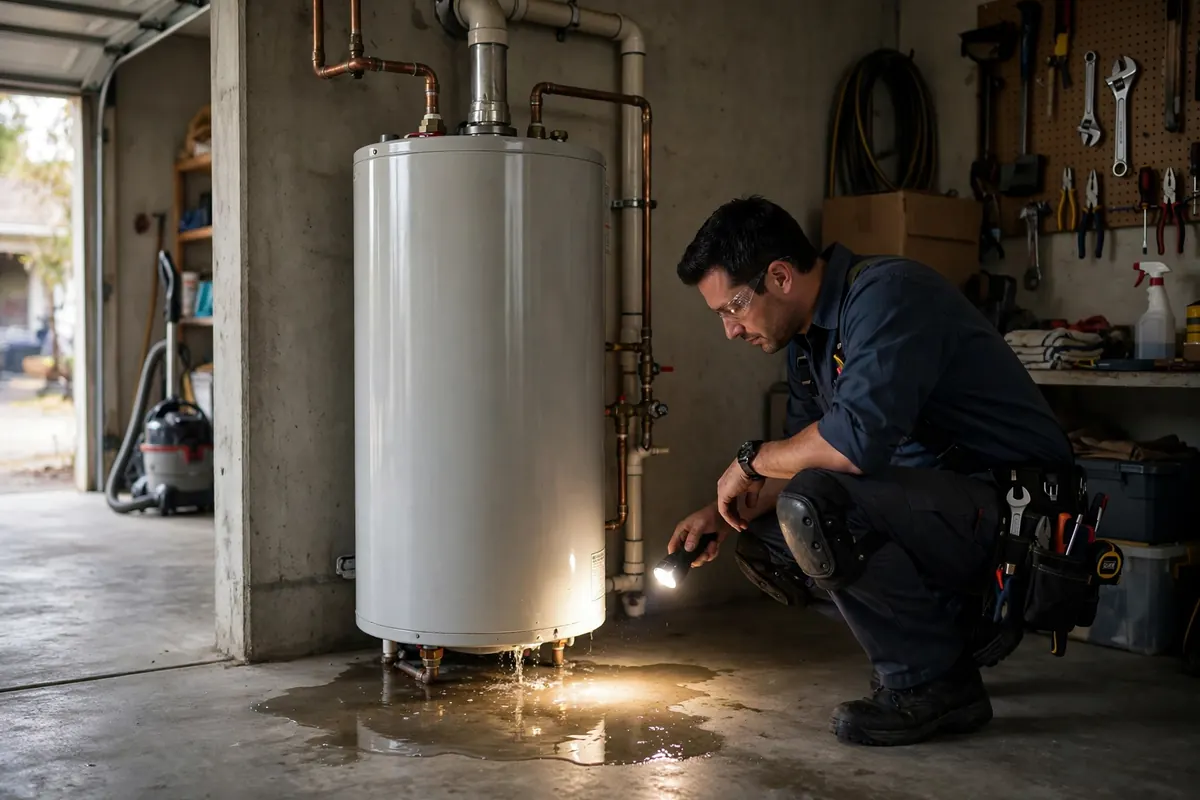
A tank leaking from its base has usually failed internally — steel tanks corrode from the inside, and once the wall is breached there is no lasting patch. But a surprising share of water-heater leaks are connections: the cold-water inlet, the hot-water outlet, or the drain valve weeping just enough to pool at the base. The visual difference is subtle; the cost difference is enormous. That is why the source must be proven, not assumed.
The temperature-and-pressure relief valve is designed to discharge water when tank pressure or temperature runs too high — dripping from its discharge pipe can mean the valve is doing its job against excessive pressure, or that the valve itself has failed. Either way, it is a safety device and deserves respect: a discharging T&P valve is telling you something about the system. We test which case you're in and document it plainly.
Many heaters sit in drain pans — and a pan full of rusty water, or a pan whose drain is clogged, can conceal a slow leak for months while the surrounding platform rots. In humid Summerville garages and closets, condensation on cold-water lines also gets mistaken for a heater leak. Sorting real leaks from condensation and pan overflow is routine detective work in our investigations.
Heaters live in utility corners crowded with plumbing: washing-machine supplies, softener lines, condensate drains, and slab supply runs all pass nearby. Water migrates along concrete and framing, so the puddle at the heater's base may have traveled from feet away. Our process deliberately isolates the heater from surrounding lines — including a pressure check with the heater valved off — before concluding anything about the tank.
☎ Call +1 843-936-8115 — open 24 hours, 7 days. We answer.
Call NowTank, inlet, outlet, drain valve, and T&P assembly are examined and documented.
We determine whether discharge signals system pressure or a failed valve.
With the heater valved off, pressure testing reveals whether surrounding lines are the true source.
Moisture mapping follows the water's path back to its real origin.
You receive a clear finding: tank, connection, valve, or an unrelated nearby line.
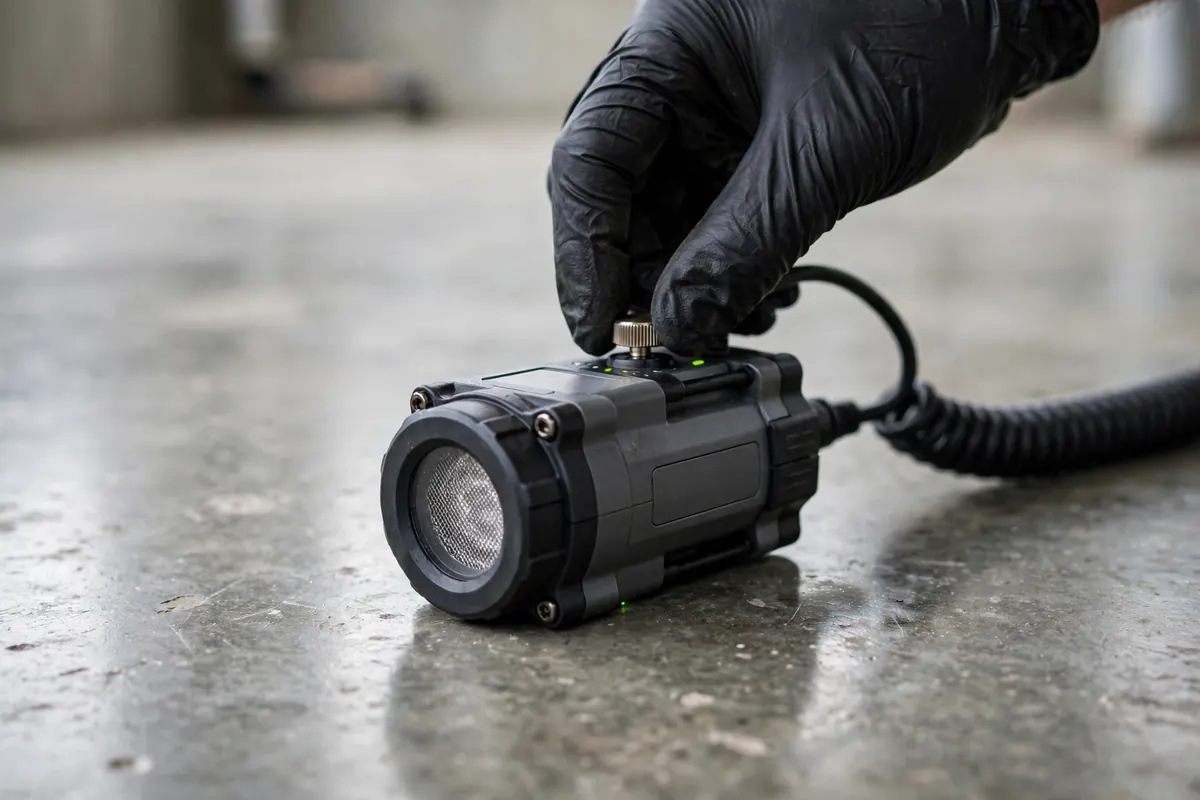
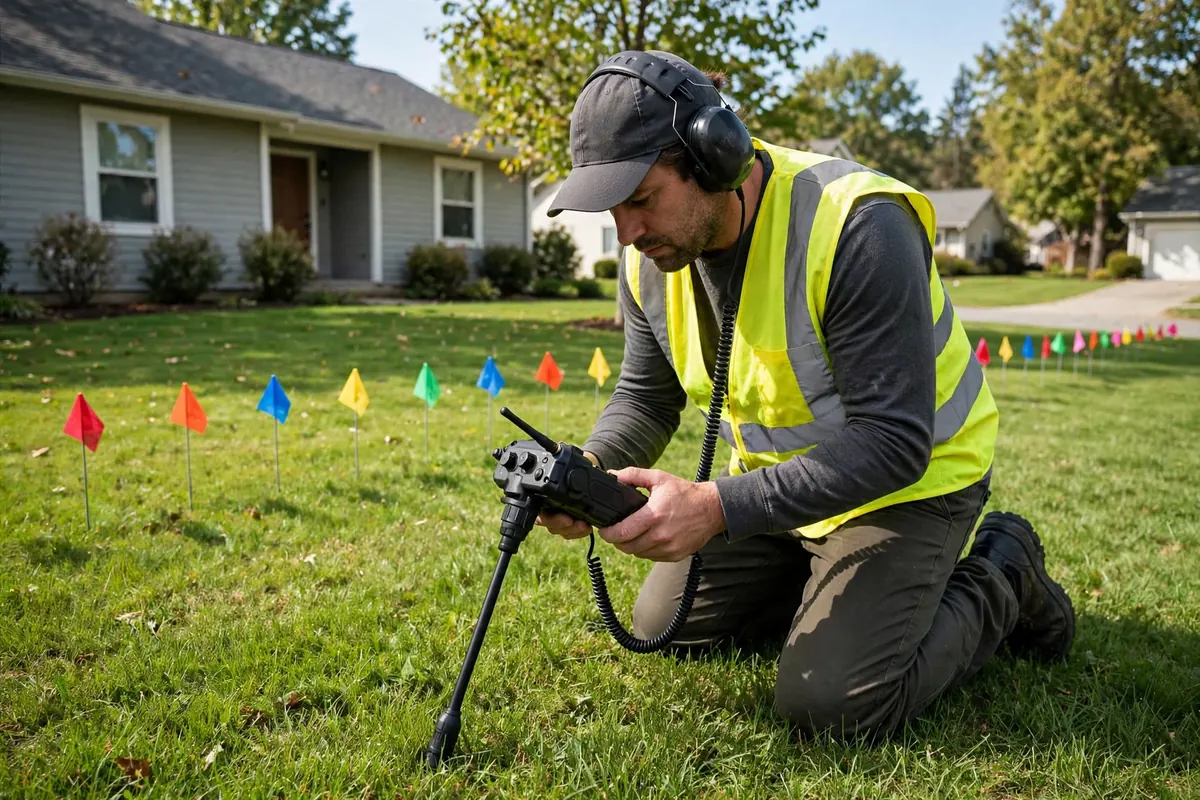
Main Water Line Leak Detection — non-invasive detection in Summerville, SC
Learn more →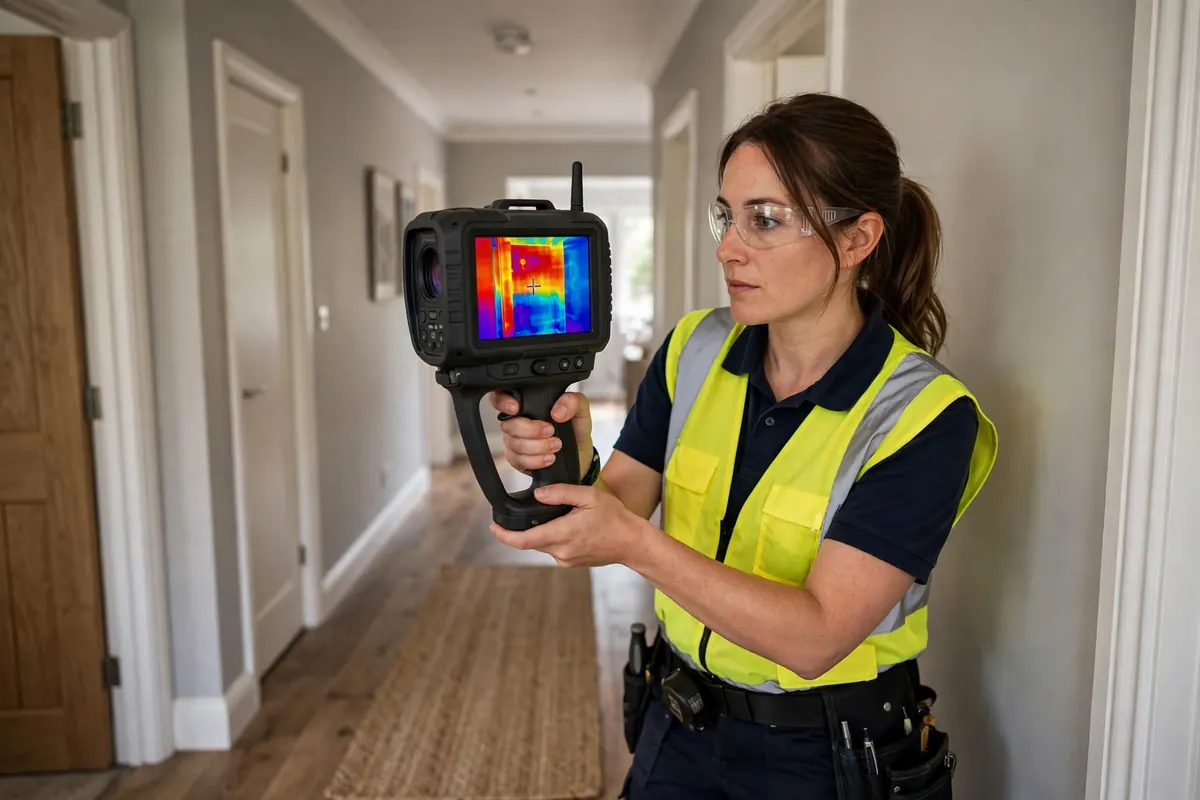
Thermal Imaging Leak Detection — non-invasive detection in Summerville, SC
Learn more →Hidden Wall & Ceiling Leak Detection — non-invasive detection in Summerville, SC
Learn more →Every day a hidden leak runs, the water bill climbs and the damage spreads. Call now — we answer 24 hours a day.
