Acoustic Leak Detection — non-invasive detection in Summerville, SC
Water escaping a pressurized pipe doesn't leave quietly. The turbulence creates a distinct sound — a hiss, a whoosh, a rumble depending on pressure and pipe material — and that sound travels through water, pipe walls, soil, and concrete. Acoustic leak detection is the discipline of capturing that sound electronically and tracing it to its loudest point.
This is strictly a pressurized-line method: supply lines, service lines, and irrigation zones under pressure. It hears what thermal cameras can't — cold-water leaks with no heat signature, leaks deep under soil, breaks in lines where temperature contrast doesn't exist. Where thermal imaging maps moisture, acoustic listening hunts the break itself.
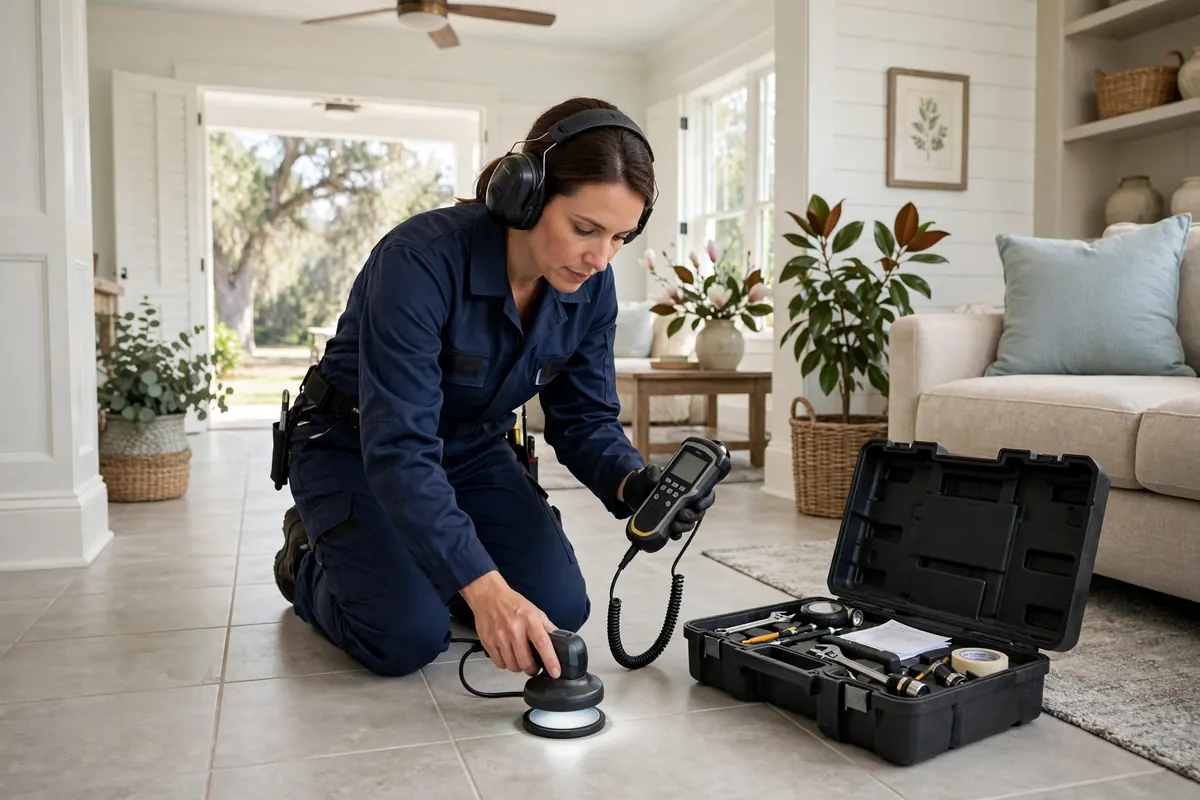
Inside an intact pipe, water flows smoothly and quietly. At a break, pressurized water jets into the surrounding soil or cavity, and that turbulence vibrates the pipe wall. The result is a broadband noise with a signature very different from normal flow — and it is loudest at the break, fading with distance. Electronic sensors exploit exactly this: move along the line, and the signal peaks where the pipe is broken.
Ground microphones and contact sensors pick up vibrations far below what the human ear catches, while electronic filters strip out traffic rumble, HVAC hum, and other ambient noise. The technician surveys along the suspected line — across a slab, along a yard service run — watching signal strength rise and fall. On plastic pipe, which transmits sound poorly compared to copper or iron, specialized low-frequency sensors compensate for the quieter signal.
On longer underground runs, two sensors placed at known points — say, the meter and the house entry — both record the leak's noise. Because the sound reaches the nearer sensor first, the time difference reveals how far along the pipe the break sits. This correlation technique narrows a hundred-foot run to a dig zone measured in feet, and it works through soil where no camera can see.
Drain and sewer lines aren't pressurized, so they make no leak noise — acoustic methods don't apply there, which is why camera inspection exists. Tiny seeps below the audible threshold, leaks in noisy environments that defeat filtering, and non-metallic pipe at long distances all challenge the method. An honest practitioner says so upfront and reaches for a confirming method rather than forcing an answer from a weak signal.
☎ Call +1 843-936-8115 — open 24 hours, 7 days. We answer.
Call NowMeter and pressure tests confirm water is escaping and identify which line is involved.
Fixtures are secured and ambient noise minimized so the leak signal stands out.
Sensors move along the suspected run, tracking signal strength to its peak.
On extended underground lines, dual-sensor correlation narrows the break's position.
The peak-signal location is marked and documented as the excavation target.
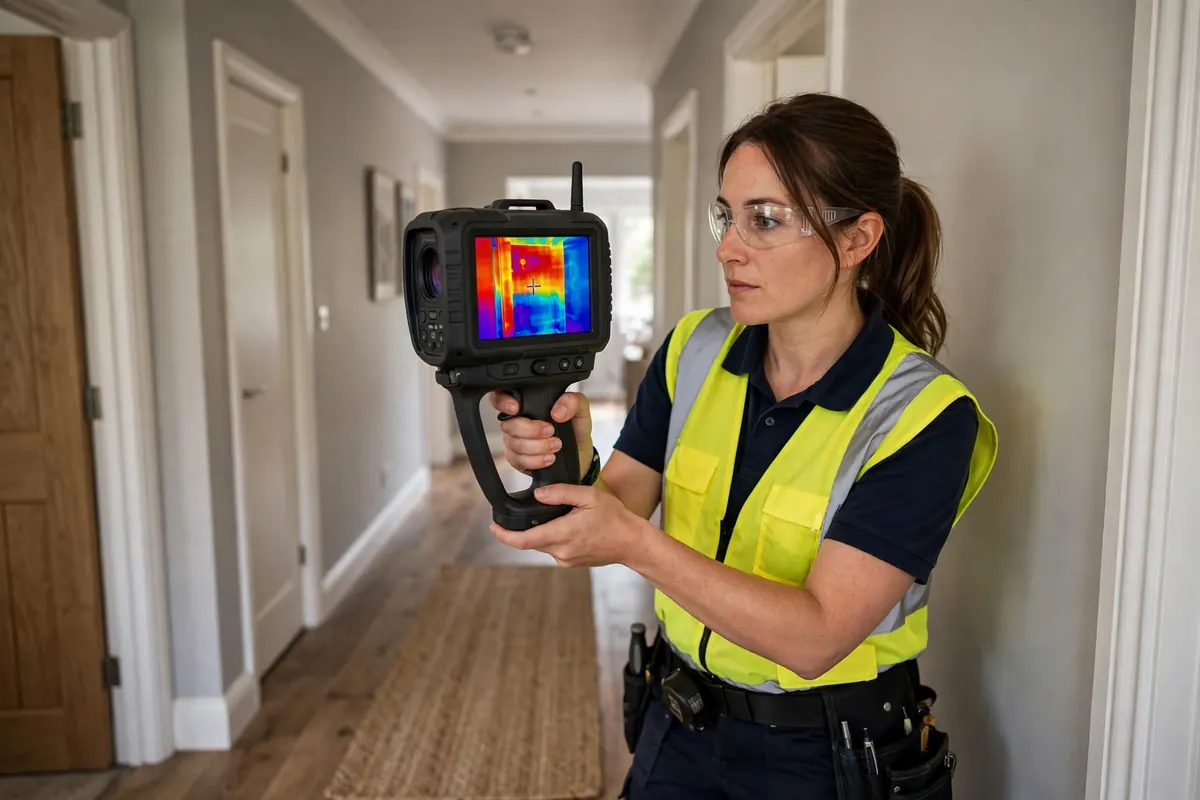
Thermal Imaging Leak Detection — non-invasive detection in Summerville, SC
Learn more →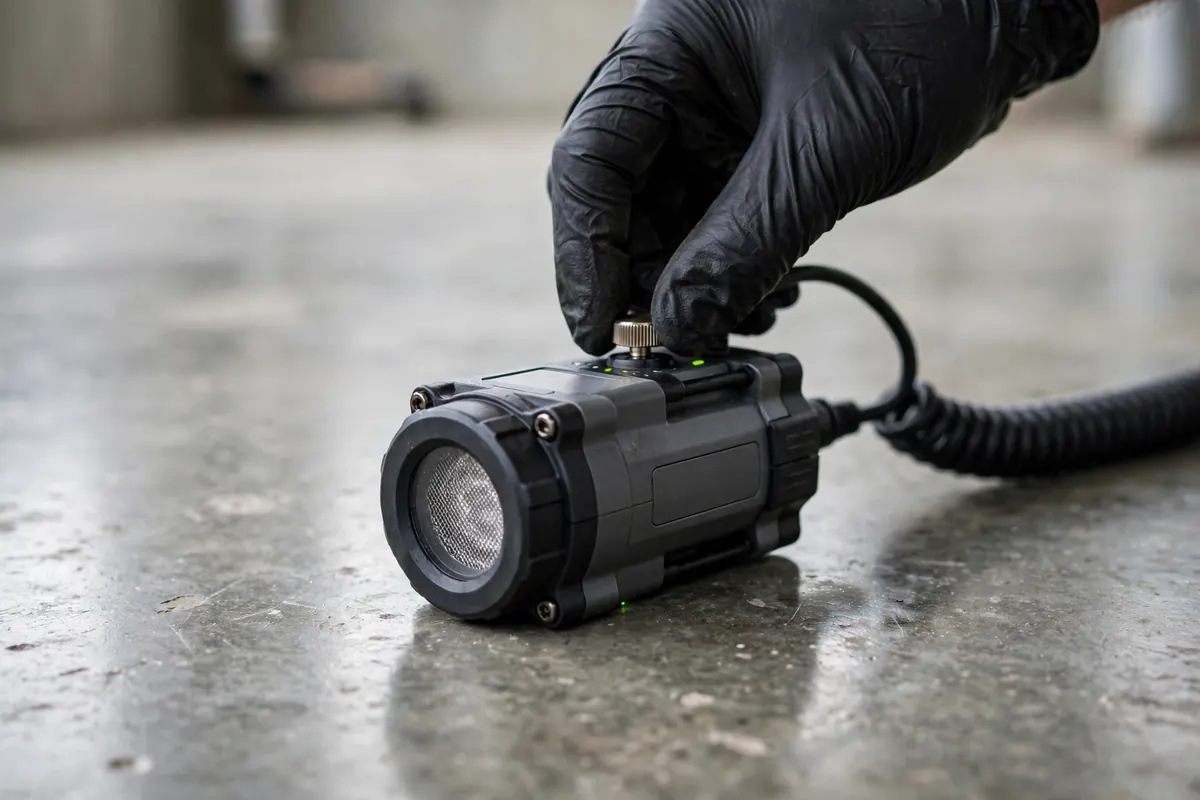
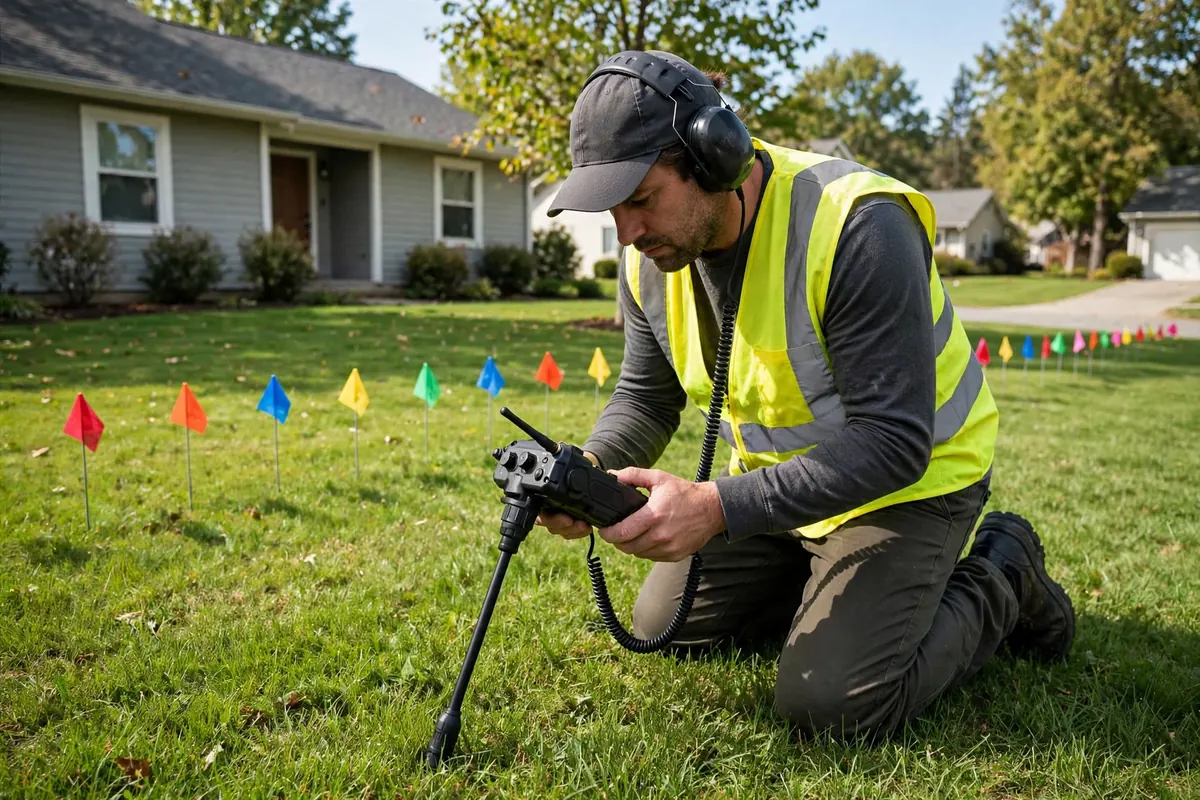
Main Water Line Leak Detection — non-invasive detection in Summerville, SC
Learn more →Hidden Wall & Ceiling Leak Detection — non-invasive detection in Summerville, SC
Learn more →Every day a hidden leak runs, the water bill climbs and the damage spreads. Call now — we answer 24 hours a day.
